Quick answer
Before funding a growth plan, test it: what extra sales it will bring, at what margin, how soon, and what it costs upfront and in working capital. Match funding to purpose: long-lived assets over their working life, working capital to the cycle it supports, and avoid paying cash for assets if it leaves wages and tax short. Borrow when the plan pays for the cost of funding with room to spare.
Key points
- A growth plan needs upfront capital and extra working capital; most owners underestimate the second.
- Match the funding term to what it pays for: assets over their life, working capital to the cycle.
- Investment Boost lets businesses deduct 20% of the cost of eligible new assets from 22 May 2025.
- Borrow when the plan's extra gross profit clearly exceeds the cost of funding it.
Most growth plans don’t fail because the idea was wrong. They fail because the business ran out of cash on the way to the payoff. A new site, a second crew, a bigger contract or new equipment all cost money before they make money, and the gap is usually bigger and longer than the owner expected. Planning the funding alongside the plan is what turns a good idea into a successful one.
What does a growth plan actually need?
Two kinds of money:
- Upfront capital: the fit-out, equipment, vehicles, deposits, recruitment and launch costs.
- Working capital: the extra wages, stock and debtors the bigger business carries, from the day costs start until the day the new revenue arrives in the bank.
Owners usually budget the first carefully and the second barely at all. Yet for a services business taking on a large contract on 20th-of-the-month terms, the working capital can exceed the upfront spend.
How do you test whether the plan pays?
Work through the numbers in this order:
- Extra sales: realistic, and phased; few plans hit full speed in month one.
- Gross margin on those sales: from your existing figures, adjusted for any discounting to win the new work.
- Extra fixed costs: staff, rent, vehicles, insurance. See the true cost of an employee.
- New break-even: fixed costs ÷ gross margin. Will the plan clear it, and how soon? See break-even point.
- Cash timeline: month by month, when costs go out and when receipts come in.
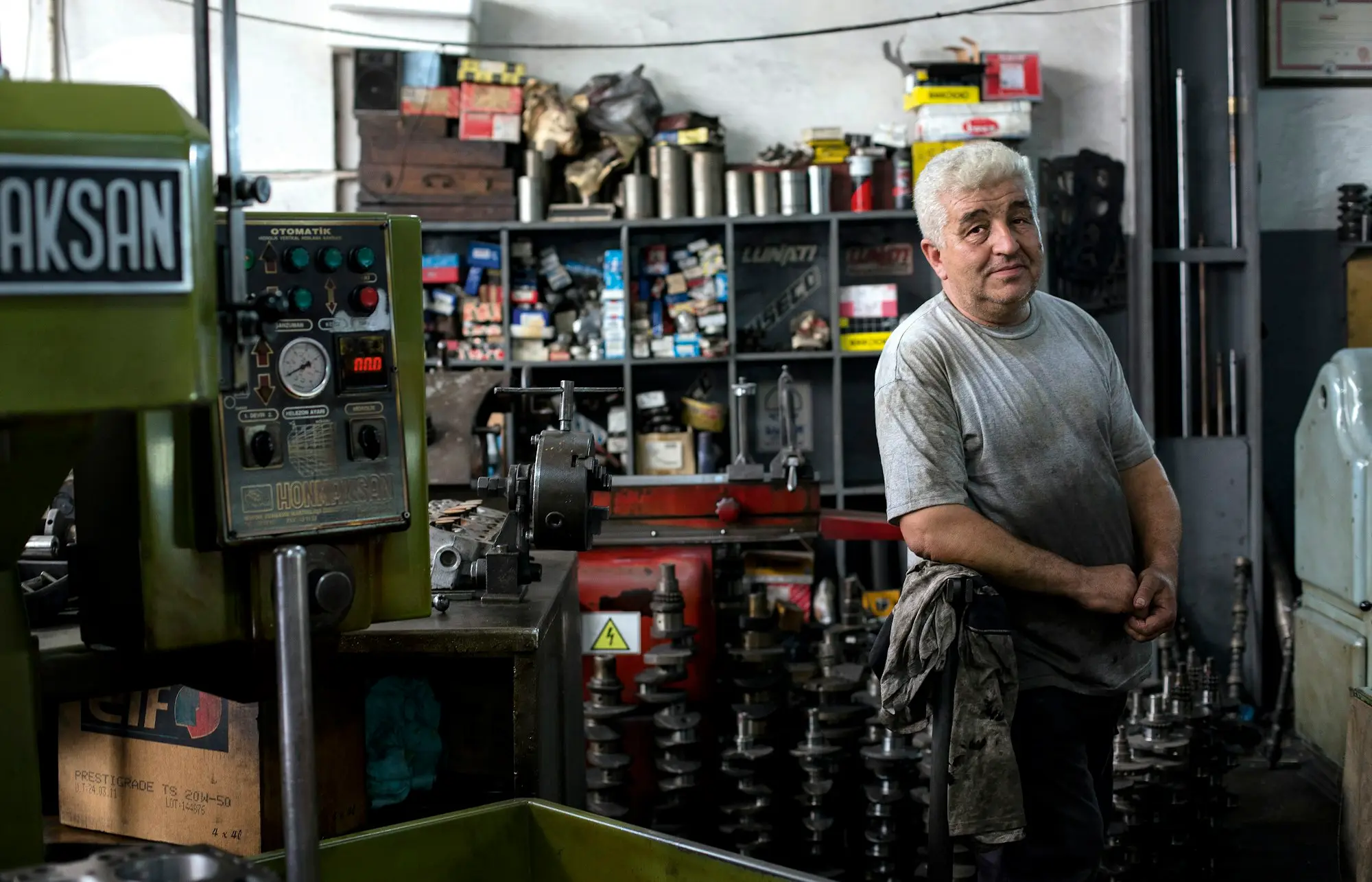
Illustrative example. A New Plymouth engineering workshop plans to buy a CNC machine for $180,000 and hire an operator, to bring in-house work it currently subcontracts and take on new jobs.
| Item | Year one |
|---|---|
| Extra sales (phased) | $420,000 |
| Gross margin on extra sales (45%) | $189,000 |
| Operator (full cost), maintenance, power, tooling | −$98,000 |
| Extra contribution before funding costs | $91,000 |
| Peak extra working capital (stock and debtors) | $70,000 |
The machine and the working capital together need about $250,000. If the cost of funding that, over terms matched to the machine’s life and the working capital cycle, is comfortably below $91,000 a year, the plan pays. If it would consume most of it, the plan needs rethinking: a smaller machine, a longer ramp-up or a price change.
How should you match funding to purpose?
A simple rule avoids most trouble: long-lived things get long-term funding; short-cycle things get short-term funding.
| Need | Suits | Avoid |
|---|---|---|
| Equipment and vehicles | Funding spread over the asset’s working life | Paying cash if it drains wages and tax money |
| Fit-out of leased premises | Term funding over a period inside the lease term | Short facilities that need repaying before the fit-out has paid for itself |
| Stock builds and debtors | Working capital facilities that flex with the cycle | Long fixed loans for a seasonal need |
| Buying a business | Term funding, often secured on property | Using the business’s own operating cash |
business.govt.nz’s guidance on borrowing makes the same point from the other side: know what you need the money for, how much, and how you’ll repay it.
Does Investment Boost change the maths?
It can. From 22 May 2025, Inland Revenue lets businesses claim 20% of the cost of eligible new assets as an immediate deduction, then depreciate the remaining 80% as usual. Eligible assets include new or new-to-New-Zealand depreciable assets and new commercial and industrial buildings; second-hand assets sourced from New Zealand and residential buildings are excluded.
For the workshop above, Investment Boost on the $180,000 machine means a $36,000 deduction in the first year, on top of normal depreciation on the remaining $144,000. That reduces tax, though it doesn’t reduce the cash needed to buy the machine. Plan the tax effect with your accountant; buy the asset because it earns its keep.
What should you have ready before asking for funding?
Lenders and owners both make better decisions with the same information on the table. For a growth plan, that usually means:
- A short written plan: what you’re doing, why now, what it costs and what it should bring in.
- A 12-month cash flow forecast showing the plan month by month, including GST, provisional tax and loan repayments.
- Recent financial statements and management accounts, plus business bank statements.
- Quotes for equipment, fit-out or vehicles, and any signed contracts or letters of intent from customers.
- Details of any property you could offer as security, if the amount is larger.
- Your tax position: whether GST, PAYE and provisional tax are up to date, or any arrangement you have with Inland Revenue.
Having these ready doesn’t just speed up an application. Putting them together often sharpens the plan itself, because gaps in the forecast show up as questions you’d rather answer now than after you’ve committed.
When is the right time to arrange funding?
Before you need it. Arranging funding while the business is trading well, with time to compare options, gives you more choice than arranging it after you’ve committed to a lease or signed a contract. Our feature on why growth eats cash shows how to forecast the working capital gap so you can size the facility properly. When the numbers are ready, you can check what you could qualify for without a credit check.
Ready to fund the next step?
We look at unsecured options for trading businesses, typically sized on turnover and bank statements, and loans secured on residential or commercial property for larger plans. Asking costs your credit file nothing, your enquiry isn’t passed around to other lenders, and a real person on our New Zealand team reads it. Bring your forecast, answer the form accurately, and we can usually tell you on the first call what’s realistic. Start your enquiry.
Frequently asked questions
How do I know if a growth plan is worth borrowing for?
Estimate the extra gross profit the plan will generate each year, subtract the extra fixed costs it adds, and compare the result with the full cost of the funding. If the plan still leaves a healthy return under cautious assumptions, it's a candidate.
What is Investment Boost?
An Inland Revenue measure that lets businesses claim 20% of the cost of eligible new assets, first available for use on or after 22 May 2025, as an immediate deduction, then depreciate the remaining 80% as usual. Second-hand assets sourced from New Zealand and residential buildings are excluded.
Should I use cash or borrow for equipment?
If paying cash would leave the business short for wages, stock or tax, spreading the cost over the asset's working life usually makes more sense. Keep cash for the day-to-day cycle.
How much working capital will growth need?
Roughly the extra monthly costs multiplied by the months it takes for the new revenue to arrive as cash, plus any extra stock and debtors the larger business carries. A cash flow forecast is the best tool for sizing it.